
Editorial · Feature Article
Fish Your Strengths: Jason Christie’s Power-Fishing Playbook
How one of the best shallow-water anglers alive decides what to throw and where to throw it, and why he spends less time worrying about the bait than you might think.
When you’re not getting bit, it’s hard to tell whether you’re in the wrong place or throwing the wrong lure. In a recent interview on Tom Redington’s YouTube channel, Bassmaster Classic champion Jason Christie explained how he solves that problem. His approach is simple and repeatable, and it works on any lake you fish.
Start with confidence
Christie doesn’t show up with a dozen rods and a fresh theory. He starts every practice with the same five to eight rods he’d have on the deck for any tournament. Those baits are his strengths: a spinnerbait, a flipping jig, a frog. He doesn’t show up with a drop shot just because it might work. He’s never won on one, so it isn’t where he starts.
He contrasts this with anglers who rig 15 rods in the morning and a different 15 by nightfall. That’s a legitimate style, but it isn’t his. His goal is to find areas where his handful of baits will catch fish, not to find the perfect bait for every spot.
The lesson for weekend anglers is to build your day around what you do well. Adjust small things like frog color or blade size to the conditions, but don’t abandon your strengths because of a hunch.
Stay open-minded about the water
Being confident in your baits doesn’t mean your mind is made up about where the fish are. Christie says it’s harder to stay open-minded on lakes he knows well, because old memories of good creeks and productive docks pull him back. He actually prefers new water for that reason.
He’s also not trying to find the best pattern on the lake. He’s looking for the second- or third-best thing that’s just starting to develop. If fifty boats are running the same obvious pattern, you’re one of fifty. A pattern that gets six or seven bites a day, but better ones, and that nobody else is on, gives you a real edge.
Fish fast until you find them
People who fish with Christie often comment on how fast he moves. That’s intentional. Until he gets a bite or two, he covers water, hitting only the high-percentage spots whether he’s winding or flipping.
His reasoning is straightforward. If he runs a creek quickly and gets five or six bites, he knows he can slow down and get more. If he crawls through it and gets eight or nine, that’s probably all it holds. Comparing bite counts across several creeks tells him where the fish are concentrated that day. He also doesn’t want every fish in an area to see his bait before he’s ready to catch them.
Buzzbaits and frogs are his top search baits for covering water quickly.
Choosing the moving bait
Christie sees a lot of overlap between spinnerbaits, bladed jigs, and swim jigs. Two anglers throwing different ones will usually both catch fish. Here’s how he divides them:
- Spinnerbait: Stained water with 6 inches to a foot of visibility, hard cover, and the pre-spawn through post-spawn window when the most fish are shallow. That’s his prime spinnerbait season.
- Bladed jig: Grass and clearer water. Christie once switched from a spinnerbait to a bladed jig mid-tournament because the water cleared and the spinnerbait no longer looked right. He threw the new bait at the same stumps, docks, and laydowns and kept catching fish. He avoids dragging a bladed jig through heavy wood because it hangs up too easily.
- Swim jig: His change-up. After he’s run a stretch with a spinnerbait and come back through with a bladed jig, the swim jig shows fish something more subtle while still being a power-fishing bait.
The squarebill as a fish locator
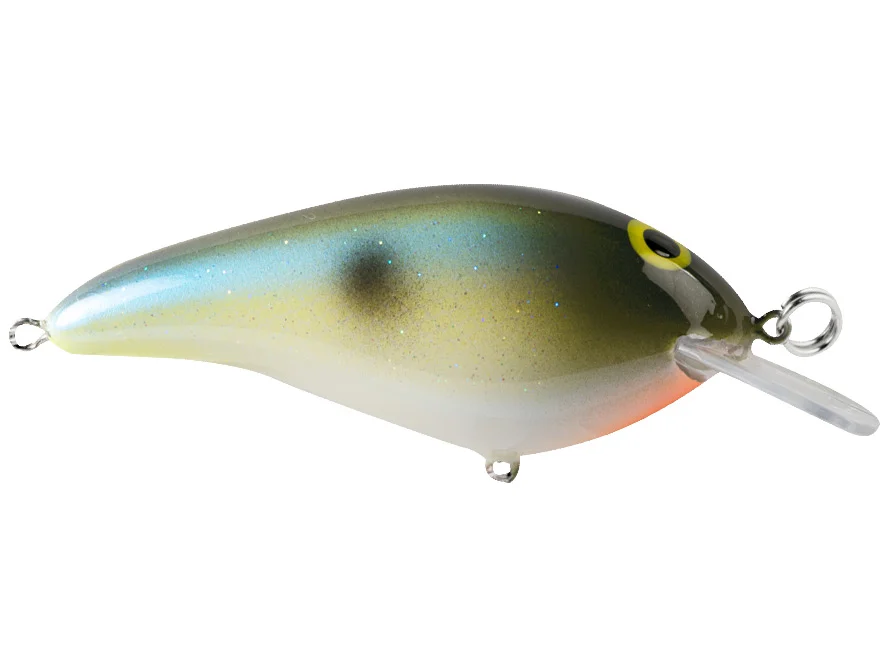
Christie uses a squarebill to figure out where fish are positioned. His go-to is the Norman Speed N. Norman rates it at 4–6 feet, but Christie says a long cast on 12 lb line gets it down close to 10. That range lets him cover everything from the bank out to mid-depths with one bait. If he starts catching fish at the deep end, he switches to a deeper diver. If he started with the deeper crankbait, he’d miss the fish sitting right on the bank.
He also matches crankbait action to the season. He prefers tighter, flatter wobbles going into winter and wide, aggressive wobbles in summer.
Jig or Texas rig: the 60-degree rule
His basic rule is to throw a jig up until the spawn, when the water is around 60 degrees or colder, and soft plastics like a Texas rig once fish are on beds. He starts with a jig because the average bite tends to be bigger, which gives him a better chance to win. When the water drops back to around 60 in the fall, he takes soft plastics out of the boat entirely, except for trailers.
Keep a wacky rig on deck
Christie keeps a spinning rod rigged wacky style, even while power fishing. He uses it for fish that swipe at a moving bait and miss, and for fish he sees cruising the bank. He once caught a big fish on a wacky rig after it refused a frog twice. If you fish 5 feet or shallower, he says a wacky rig can add an extra fish or two each day.
Color comes last
Christie keeps color simple: something that looks like a shad, something that looks like a perch, and black and blue. In his view, the lure, the action, the depth, and the area all matter more than color.
Cold fronts move the bait, not just the bass
Christie says forward-facing sonar changed how he thinks about cold fronts. He’s watched baitfish pack the backs of creeks one day and disappear from them entirely the day after a front, with the bass following the bait toward the creek mouths. He doesn’t think fronts shut bass down as much as anglers assume. He’s had some of his best spinnerbait days in water in the mid-40s. The fish are still willing to bite. They’ve just moved.
His approach after a front is to fish it like a practice day: move quickly, test different areas, and forget where you caught them yesterday.
Picking the right creek
If Christie could choose one type of area, it would be a big creek with plenty of flats and a good channel or deep water nearby. That setup can hold a large population of fish that move up and down with the bait. He says it varies by region, but this is what he looks for first.
The takeaway
Christie’s approach comes down to a few principles. Start with baits you trust. Move fast until the fish show you where they are. Look for the pattern other anglers haven’t found yet. Once you’re in the right spot, the specific bait and color matter less than you’d expect.
Source: Jason Christie interview, “You’re Using the WRONG Bait (Here’s the Fix)”, Tom Redington’s YouTube channel (@TomRedington). Christie posts his own breakdowns as Christie Fishing on YouTube and social media.