JPFish

The Lure Files

Quick reads on new, old, weird, and historic lures. Thirty seconds each.

No. 0021949

The Creme Wiggle Worm

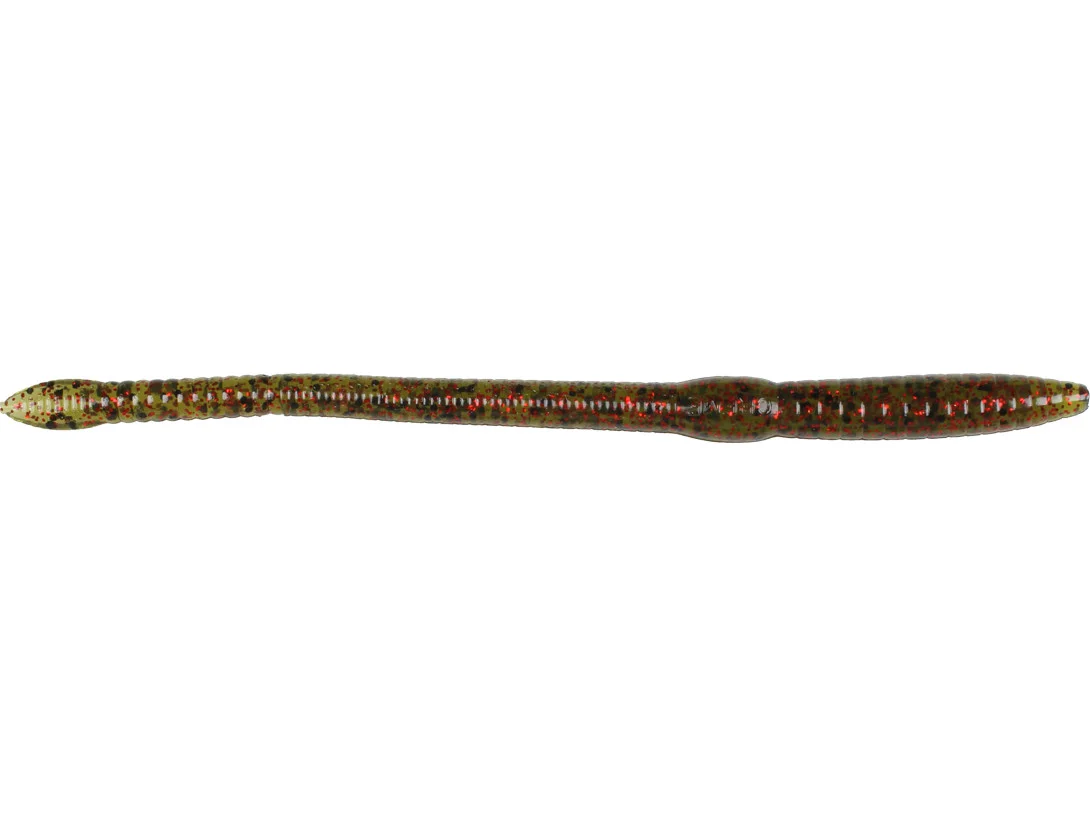
Modern Creme Scoundrel soft plastic worm in green pumpkin with red flake
The modern Creme Scoundrel — the direct descendant of Nick Creme’s 1949 Wiggle Worm.

Nick Creme (1910–1984) was a self-taught chemist and machinist in Akron, Ohio. In the late 1940s he and his wife Cosma consulted with DuPont technicians in Cleveland, then went home and experimented with vinyl, oils, and pigments — cooking the mixture on their own kitchen stove and pouring it into lifelike molds Nick cut from steel. He got the formula right in 1949. The first product was the Creme Wiggle Worm (later renamed the Scoundrel), rigged the way Ohio anglers rigged live nightcrawlers: three hooks, beads, and a small propeller. At the Cleveland Sportsman’s Show a distributor sold roughly 9,600 packs in a few days. The kitchen operation moved into a small Akron plant, and in the late 1950s — as new Southern reservoirs pulled bass fishing into a boom — Creme relocated to Tyler, Texas, where the company is still headquartered today. The plastic worm changed the sport at a mechanical level. It made Texas-style rigging possible, and pulled worm hooks, bullet weights, and worm rods into existence behind it. Tom Mann’s Jelly Worm followed in 1967, Mister Twister’s curly tail in 1972 — but Creme was first, and the rigging logic he borrowed from a live nightcrawler harness is the same logic still underneath every Texas, Carolina, and wacky rig on the water. Nick was inducted into the Bass Fishing Hall of Fame; he died in 1984, and in 1989 Creme Lure merged with Knight Manufacturing (the tube-worm company founded by Wayne and Judy Kent in 1965). Creme Lure Co. still runs out of Tyler, and the Scoundrel is still in the lineup.

Still swimming

The original Scoundrel is still made in Tyler, Texas, alongside a modern lineup — Lit’l Fishie, Crappie Shad, and the Reel Scremer swimbait (a Hank Cherry collaboration). Buy direct from Creme Lure Co., or grab the current Scoundrel from Tackle Warehouse’s Creme brand page.

Creme Lure Co. →

Go deeper

Every soft plastic rig on the site descends from what Nick and Cosma poured in 1949. Start with the Texas rig — the direct heir to the Wiggle Worm — then branch into wacky, Ned, and dropshot.

Texas Rig Guide →

No. 001c. 1848

The Buel Spoon

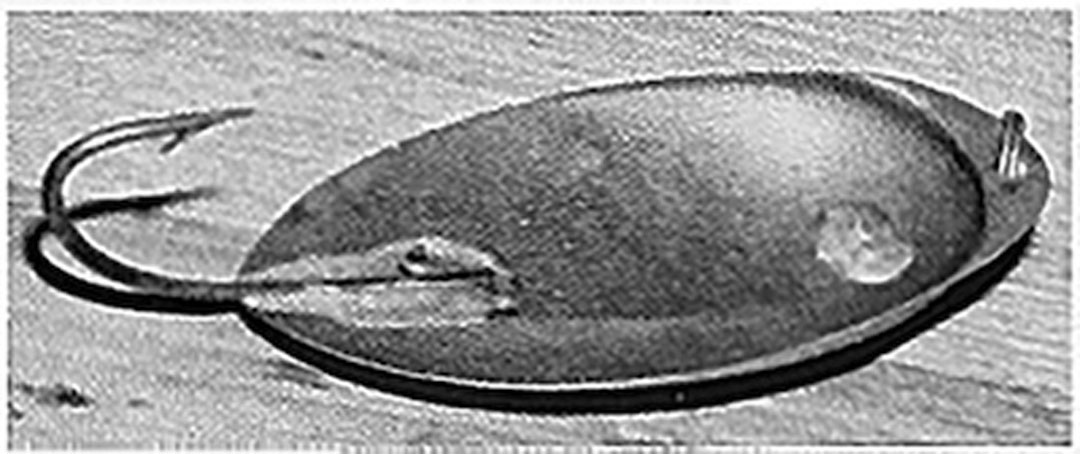
Black-and-white photograph of an early Buel spoon lure with a fixed hook
An early Buel spoon. Whitehall, New York, mid-1800s.Photo courtesy of Eppinger Manufacturing

Legend says a teenage Julio T. Buel dropped a table spoon overboard on a lake near the New York–Vermont border and watched a fish crush it on the fall. He spent the next two decades tinkering, and by 1848 he was manufacturing spoon lures commercially in Whitehall, New York. In 1852 he received one of the first U.S. fishing lure patents ever issued. Every spoon, spinner, and flash bait in your box — flutter spoons included — traces back to that piece of dropped silverware.

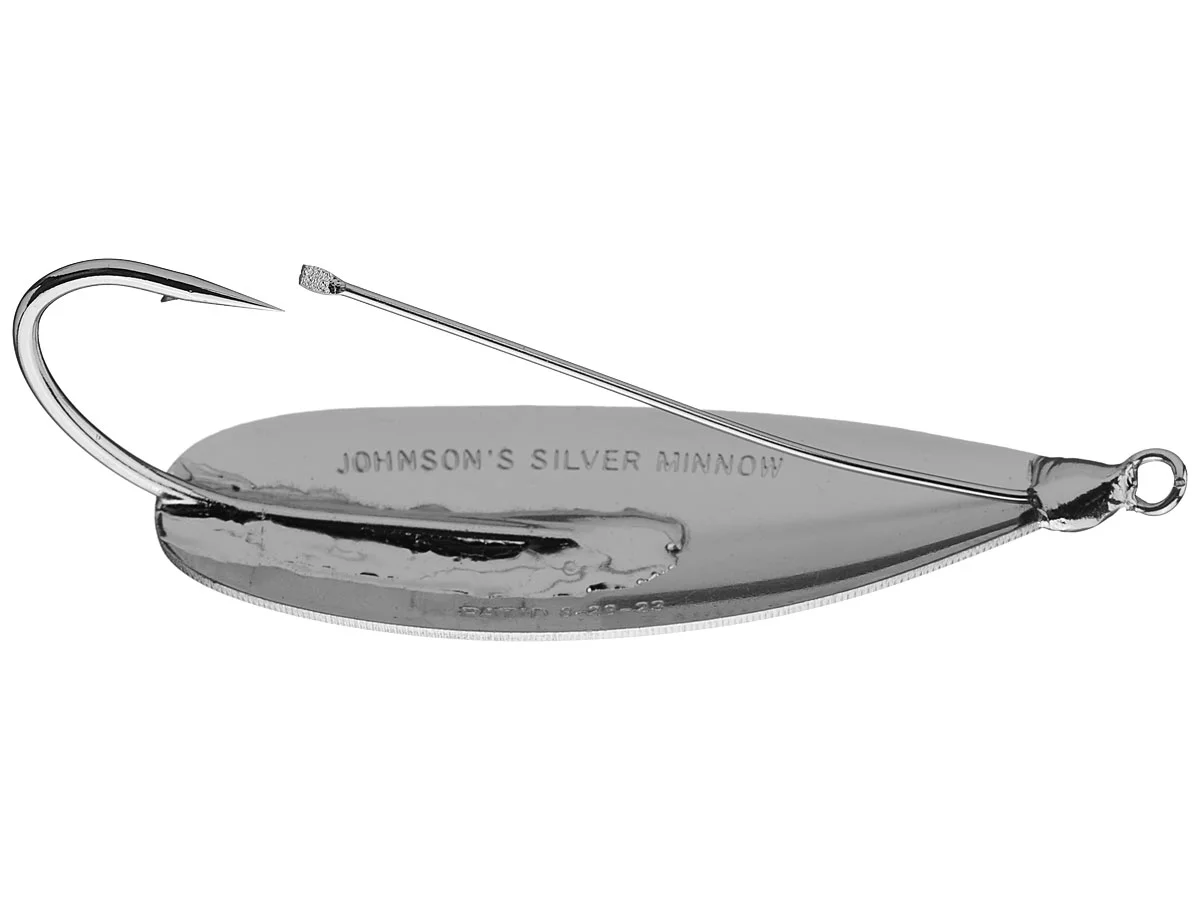
Johnson Silver Minnow weedless spoon in silver with wire weedguard
The Johnson Silver Minnow, patented 1923. Still in production.

Still swimming

The closest thing on shelves today is the Johnson Silver Minnow — patented in 1923 as the “Original Weedless Wonder,” still in production, and still pulling bass out of the slop a century later.

Shop it at Tackle Warehouse →

Go deeper

Modern spoon fishing on jpfish:

Flutter Spoon Guide →