
Field Guide
Tail Spinner
Compact metal + spinning blade — finesse it on spinning gear or bomb a heavy one offshore on casting gear.
Confidence
Strong Option
Belews · Fall
Gear
Rod
Finesse (1/4–3/8 oz): Finesse Spinning — 6'10–7'3" ML / Fast
Reel
Spinning · 2500-size · 5.8:1–6.2:1
Line
10–15 lb Braid → 6–10 lb Fluorocarbon leader (FG + Palomar)
60-Second Refresher
When to Throw
Good Water
Bass schooling or chasing bait, suspended fish over points/humps/channels, cold water with fall baitfish or winter deep fish, wind or current adds extra cover and flash. Late fall through winter, when fish pull offshore and hug the bottom (within 5–10 ft of it). Summer offshore schools.
Bad Water
Thick grass, brush, or wood where trebles hang constantly. Ultra-slick calm water with followers that won't commit. Very shallow target fishing where a single-hook bait is cleaner. Fish suspended high in the column — a jighead minnow (see Mid-Strolling) is usually better.
Jackall Deracoup
Finesse line — 3/4 oz bridges to casting gear
Jackall Deracoup — 1/4 · 3/8 · 1/2 · 3/4 oz
Default to 3/8 oz Clear Shad. Switch to Silver for bright days and flash, HL Bluegill for grass edges and post-spawn bluegill forage. HL Black & Gold for sun and tannic or stained water, Blueback Chartreuse for low light.

Jackall Deracoup
Clear Shad
Everyday clear water, baitfish schools, suspended bass
Best first choice — most natural

Jackall Deracoup
Silver
Bright days, schooling fish, winter baitfish, open-water flash
Maximum flash and visibility

Jackall Deracoup
HL Bluegill
Bluegill forage, post-spawn bass, grass edges, shallow offshore cover
Pairs with grass and bluegill-oriented fish
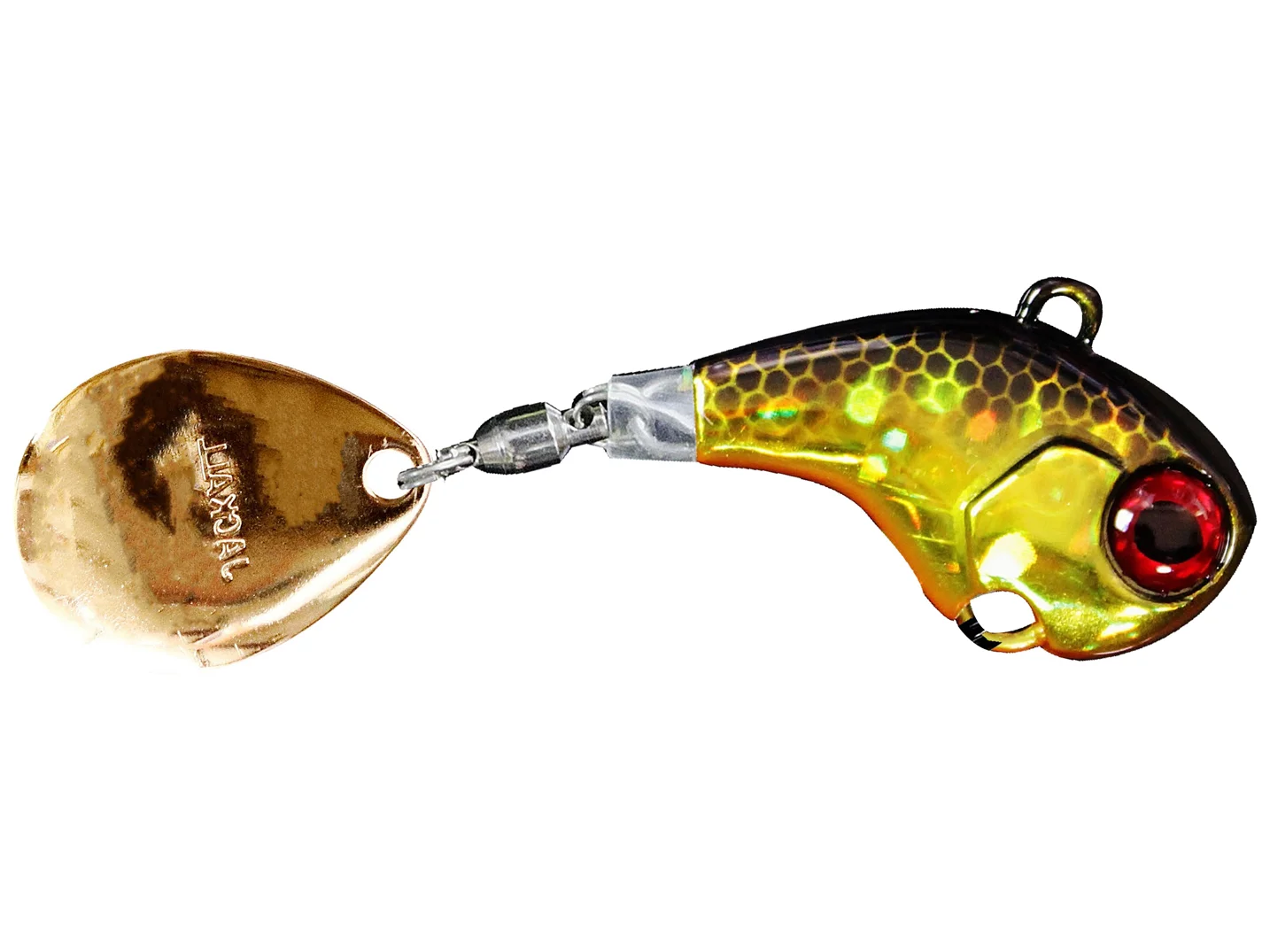
Jackall Deracoup
HL Black & Gold
Sunny days and tannic or stained water
Gold reads better than silver in darker water
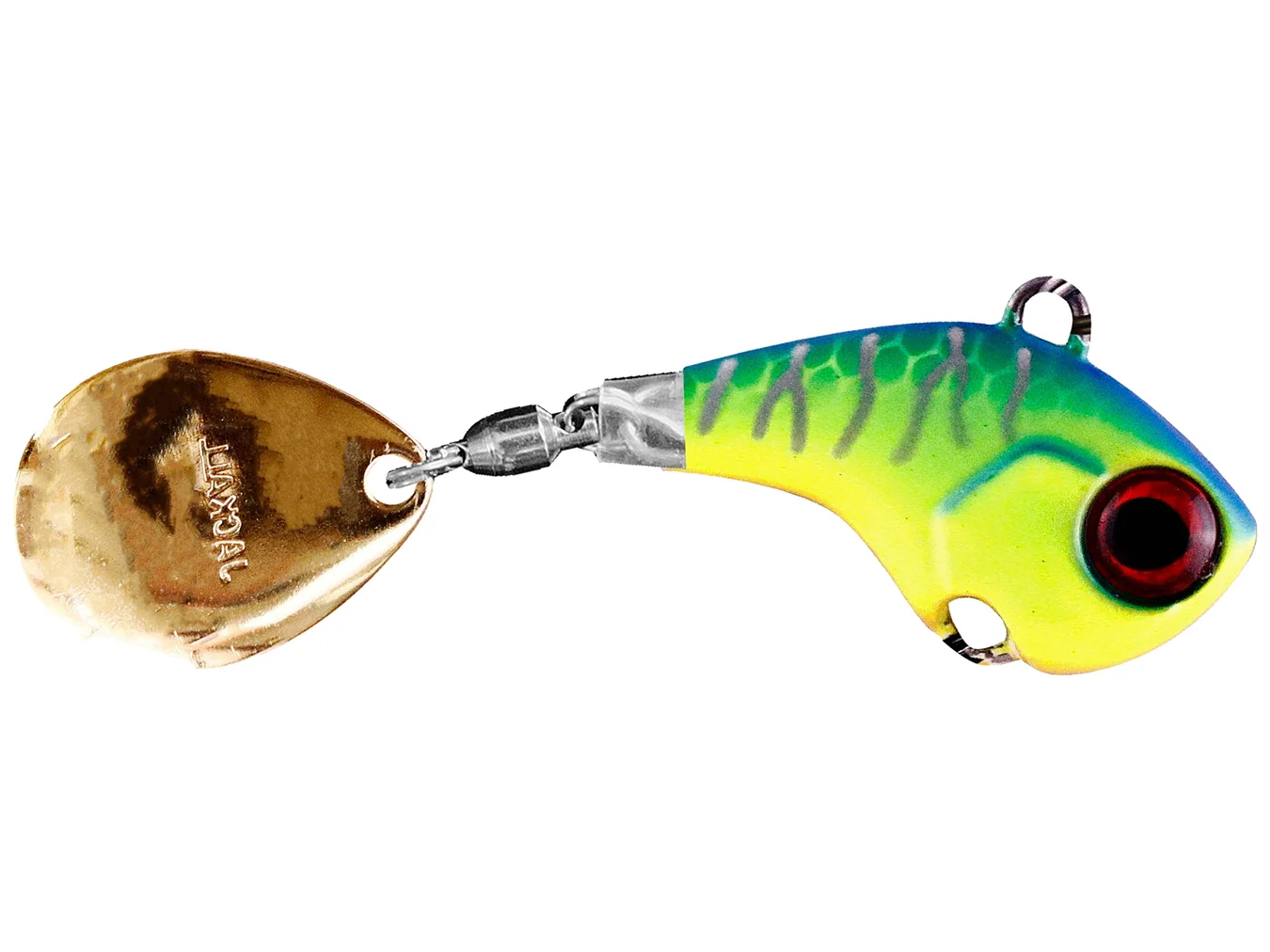
Jackall Deracoup
Blueback Chartreuse
Overcast, rainy, or windy days
A brighter bait when light is low
Damiki Axe Blade
Long casts offshore, deep or windy conditions, short-striking fish.
Damiki Axe Blade Tail Spinner — 1/4 · 1/2 · 3/4 · 1 oz
The heavy casting bait. A rear double stinger hook sits under the blade to catch fish that swipe at the blade.
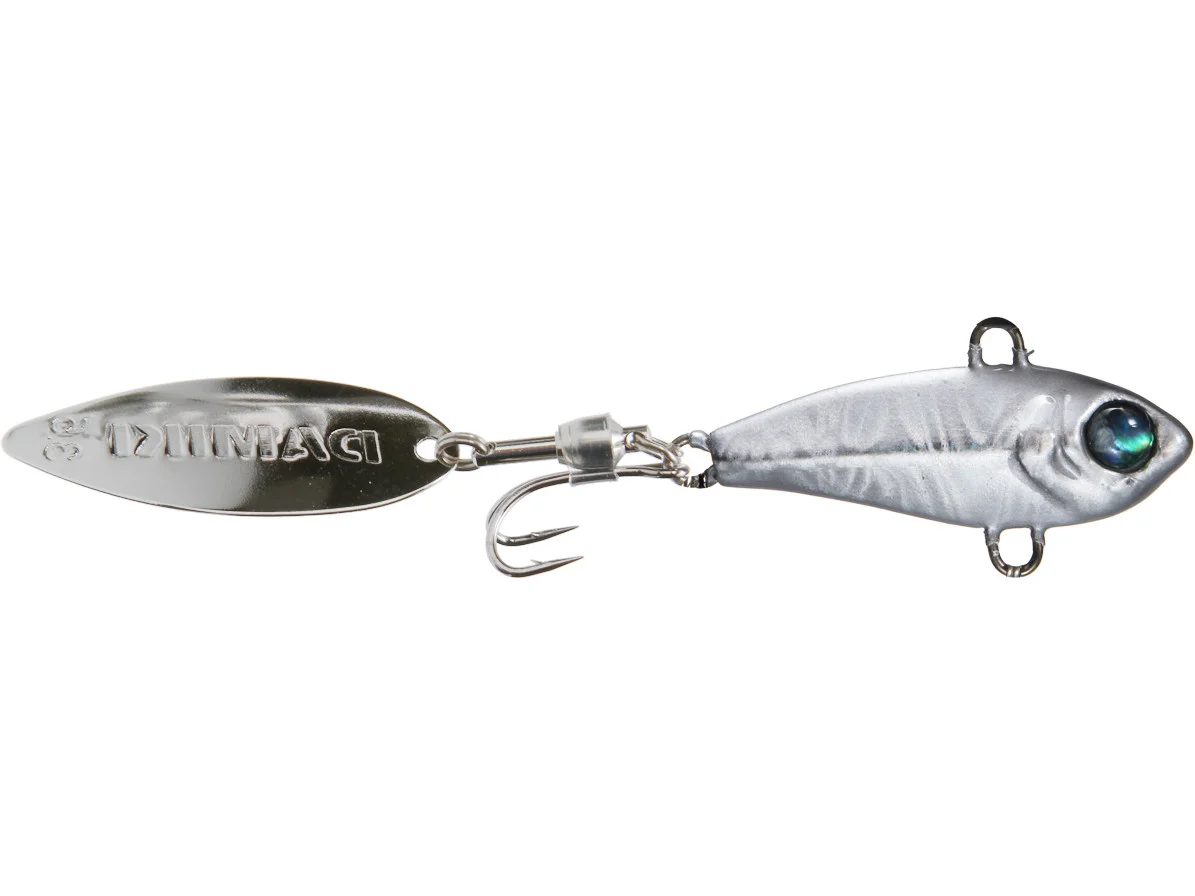
Damiki Axe Blade 1 oz
Holo Silver
Sunny days
Chrome flash, classic shad imitation
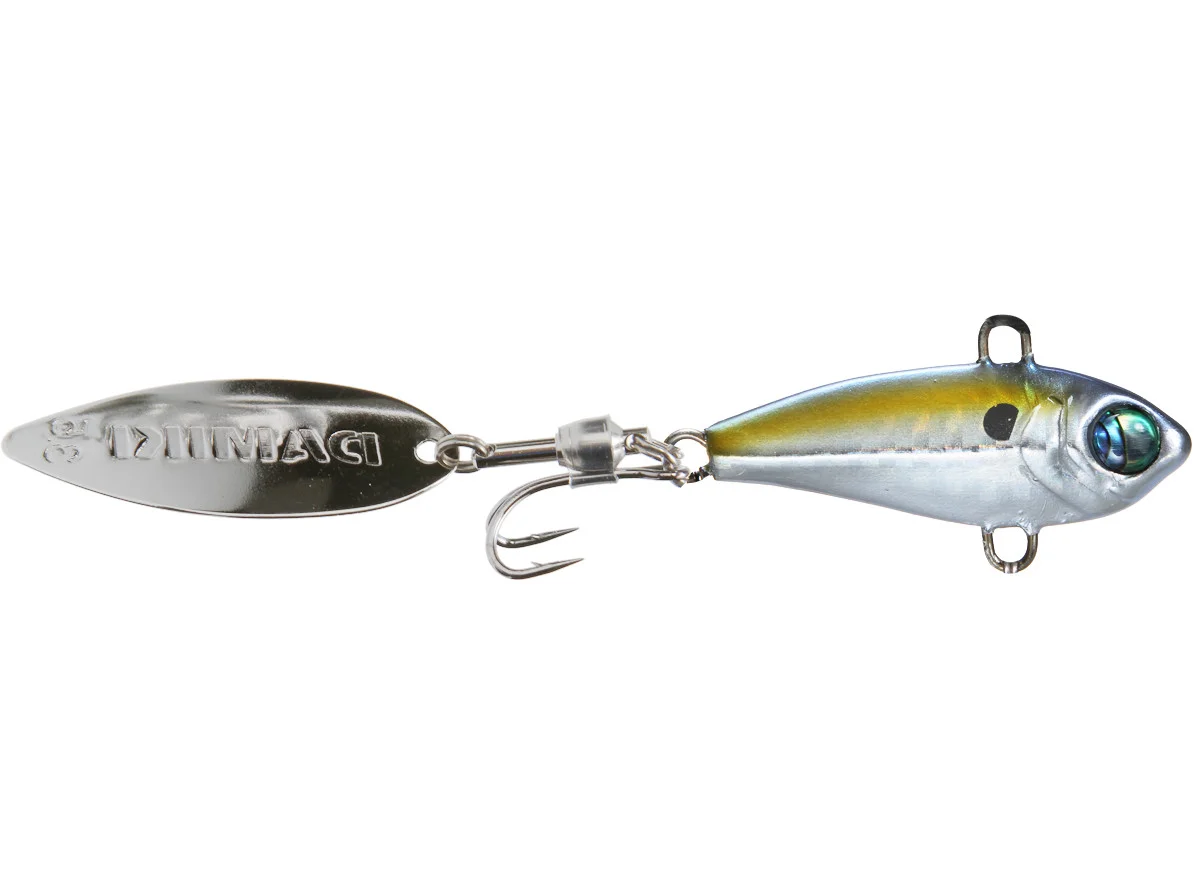
Damiki Axe Blade 1 oz
Holo Real Shad
Everyday
Natural shad
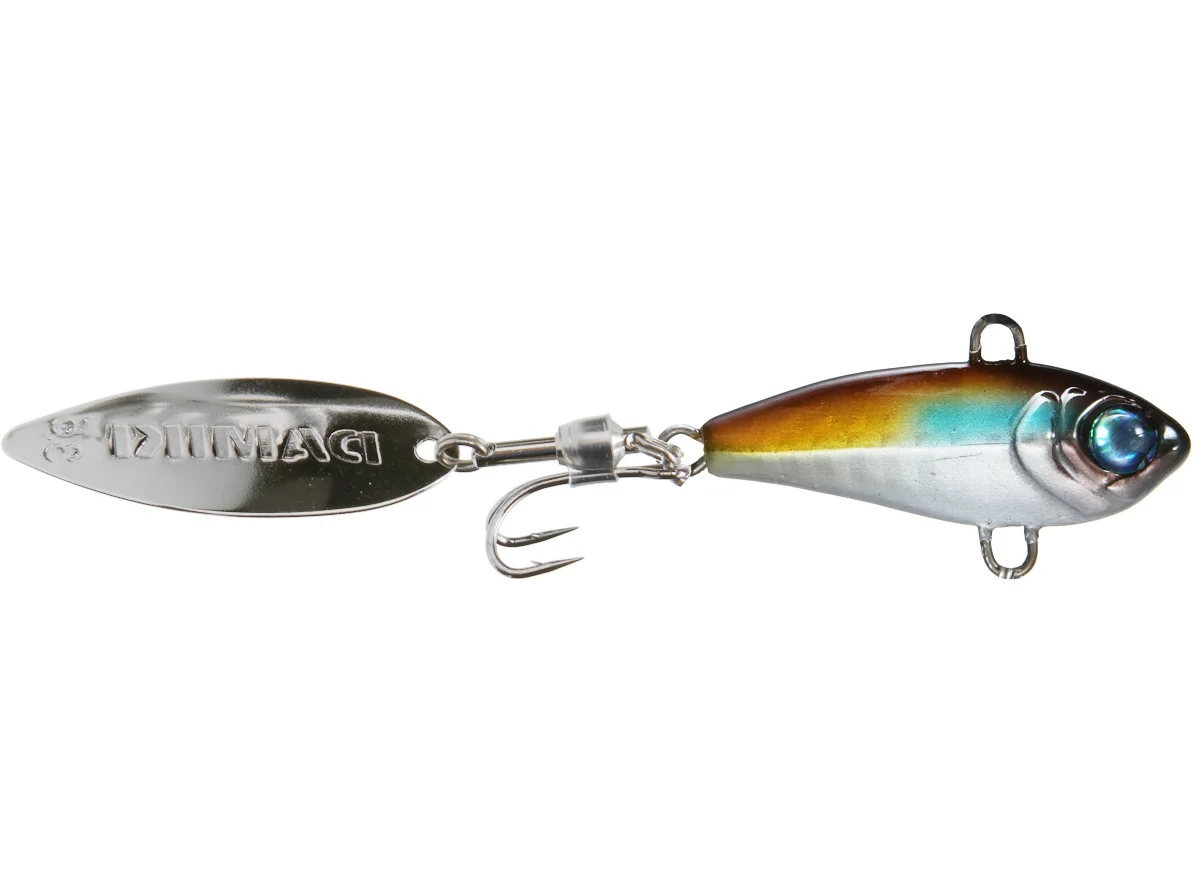
Damiki Axe Blade 1 oz
Bream
Offshore cover
Bluegill-oriented fish
Blade Runner Line Through
Hold more fish.
Blade Runner Line Through Tail Spin — 1/2 oz
The line runs through the body and ties to a free treble; on hookup the body slides up the line so fish can't use its weight to throw the hook.
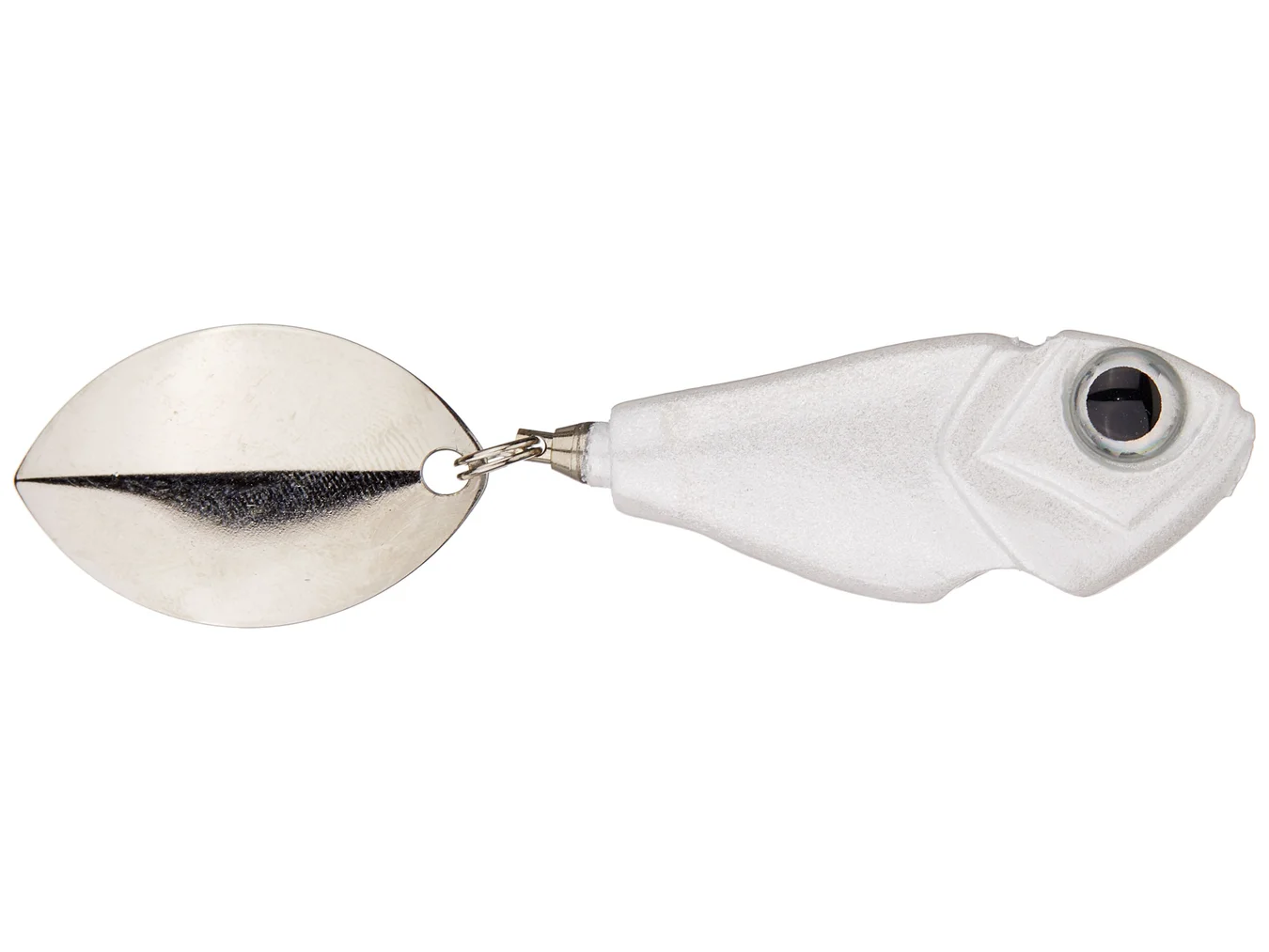
Blade Runner 1/2 oz
Pearl White
Overcast or low light
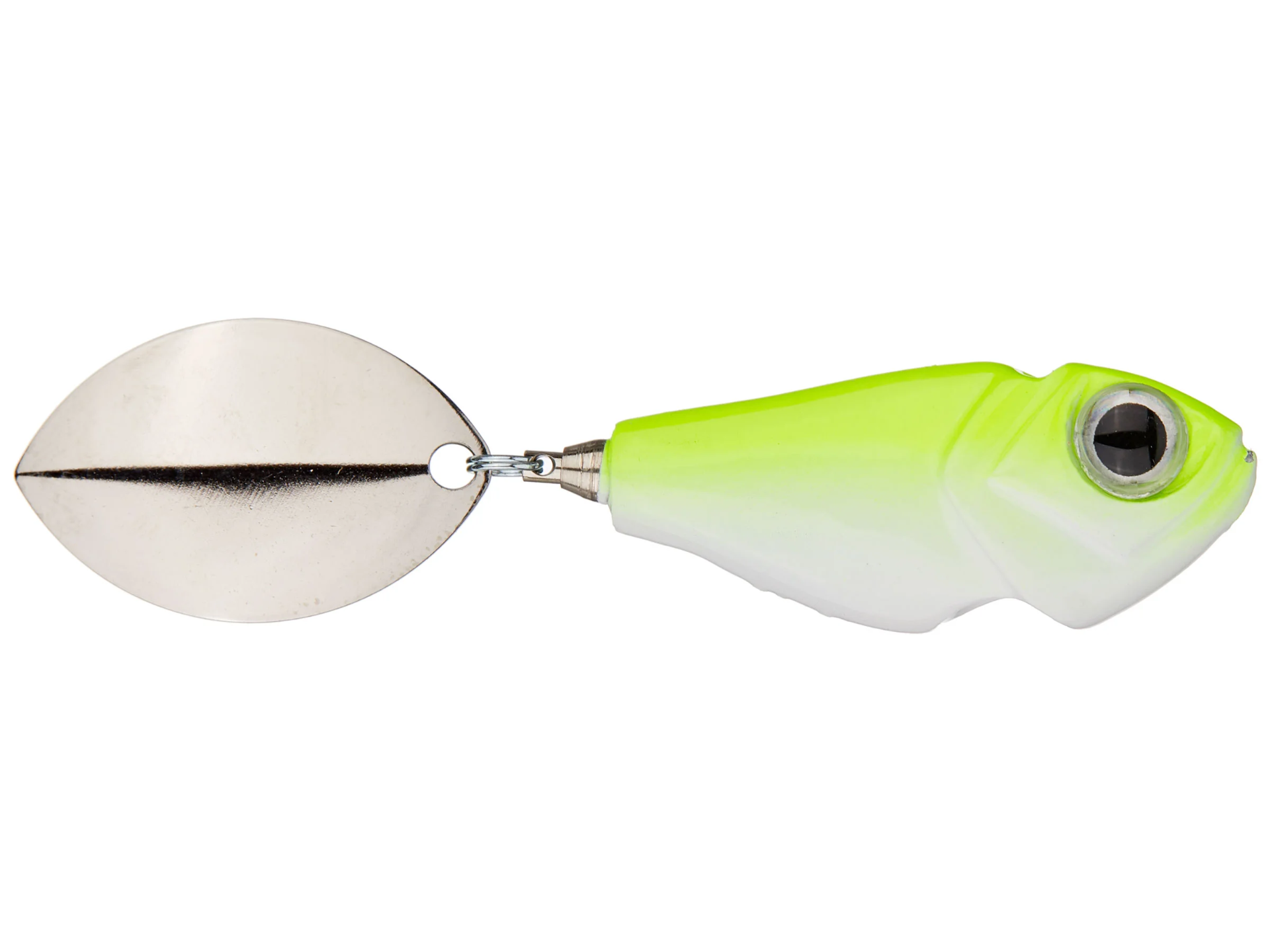
Blade Runner 1/2 oz
Chartreuse White
Stained water, cloudy days
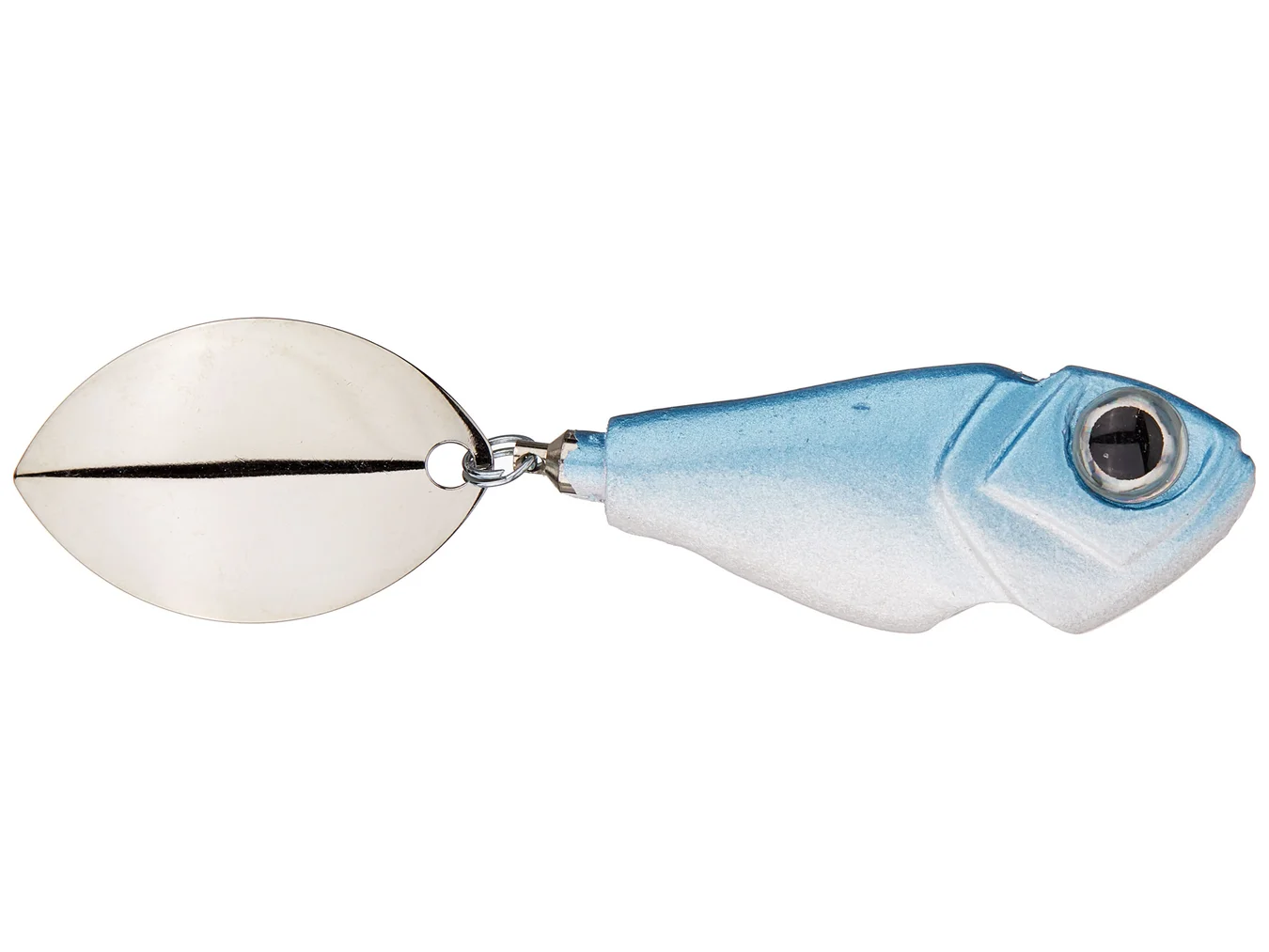
Blade Runner 1/2 oz
Blue Shad
Clear water, shad forage
Weight vs Depth
1/4 · 3/8 · 1/2 · 3/4–1 oz
Pick weight by depth and how fast you want it to fall — not by bait size.
1/4 oz
Shallow / Finesse
5–12 ft
Schooling fish, slower fall, finesse bite
3/8 oz
Workhorse (spinning)
10–20 ft
All-purpose — start here most of the time
1/2 oz
Deep / Fast
15–30 ft
Deep fish, wind, current, vertical presentations
3/4–1 oz
Heavy / Casting
15–35+ ft
Long casts, bottom-hugging winter fish, wind, current. Fish it on casting gear.
Retrieves
Lift & Fall · Slow Roll · Count Down · Vertical Jig · Reel-Only Count · Rip & Drop
Match cadence to fish position — bites almost always come on the fall.
Lift & Fall
Most bites here
Lift and follow it back down with the rod tip — don't just drop the rod. Slow follow = slow fall, faster follow = faster fall. Two variables: how high (a short 9-to-10 o'clock lift vs. a big lift to 12–1 o'clock) and how fast.
Watch the braid jump
Slow Roll
Suspended fish
Cast beyond the target, reel just fast enough to keep the blade turning
Good around bait balls
Count Down
Targeted depth
Count to fish depth, then steady retrieve through the strike zone
Use sonar to pick the number
Vertical Jig
Deep / Winter
Drop directly below the boat on sonar fish — lift, fall, pause, repeat
1/2 oz keeps you connected
Reel-Only Count
Learning the bait
Hold the rod at 10 o'clock and don't move it. Give it ~3 reel turns, let it swing back to bottom, repeat. Learn your fall count — if it lands early or feels heavy, that's a fish.
Saves your wrist on long days
Rip & Drop
Post-front trigger
A hard rip up and a fast fall. Mix one in every few lifts.
Reaction bite for lethargic fish after a cold front
Hookset & Landing
Snap-set, constant tension
Bites are fast — fish feel the metal and spit it. Snap-set with a short wrist flick the instant you feel a tick, the bait stops falling early, the line goes slack, or the blade's throb disappears. Skip the big sweeping hookset. Keep constant tension, reel the fish in quickly, and net or swing it before it can jump and throw the heavy bait.
Where to Throw Each
Points
Cast across the taper and count it down.
Humps
Work the top, edge, and drop-off. If you start getting ticks from white bass or crappie, you're in an active area — bass are often underneath.
Channel Swings
Good for suspended fish near bait.
Bridge Pilings
Count down beside shade lines.
Grass Edges
HL Bluegill around bluegill forage.
Schoolers
Throw past the bust and retrieve through it.
Main-lake points running deep
Long cast, let it hit bottom, work it back like a deep crankbait.
Creek & cove mouths
Where shallow water meets the main lake — classic late-fall and winter staging.
Flats dropping into the basin
Work the break.
Cheat Sheet
Default / unknown
3/8 oz Deracoup Clear Shad — Lift & Fall.
Bright sun / chasing bait
Switch to Silver.
Bluegill banks / grass edges
HL Bluegill, slow roll along the edge.
Deep / windy / vertical
1/2 oz, drop straight down on marked fish.
Schooling fish busting
Throw past the bust, count down 2–3 seconds, then steady reel.
Fish high, calm, following without eating
Switch to a Spybait or jighead minnow.
Bottom-hugging winter fish offshore
1 oz Damiki Axe Blade Holo Silver on casting gear — long cast, let it hit bottom, Lift & Fall back.
Losing fish on jumps
Blade Runner Line Through — body slides up the line on hookup.
Bait feels mushy, no throb
It's fouled from a slack fall — reel up, clear it, control the next fall.
Learning the bait
Reel-Only Count — rod at 10 o'clock, three turns, count the fall.
Tannic water / sunny
Deracoup HL Black & Gold.
Shop the recommended gear, lures, and trailers
3 hand-picked items for this technique